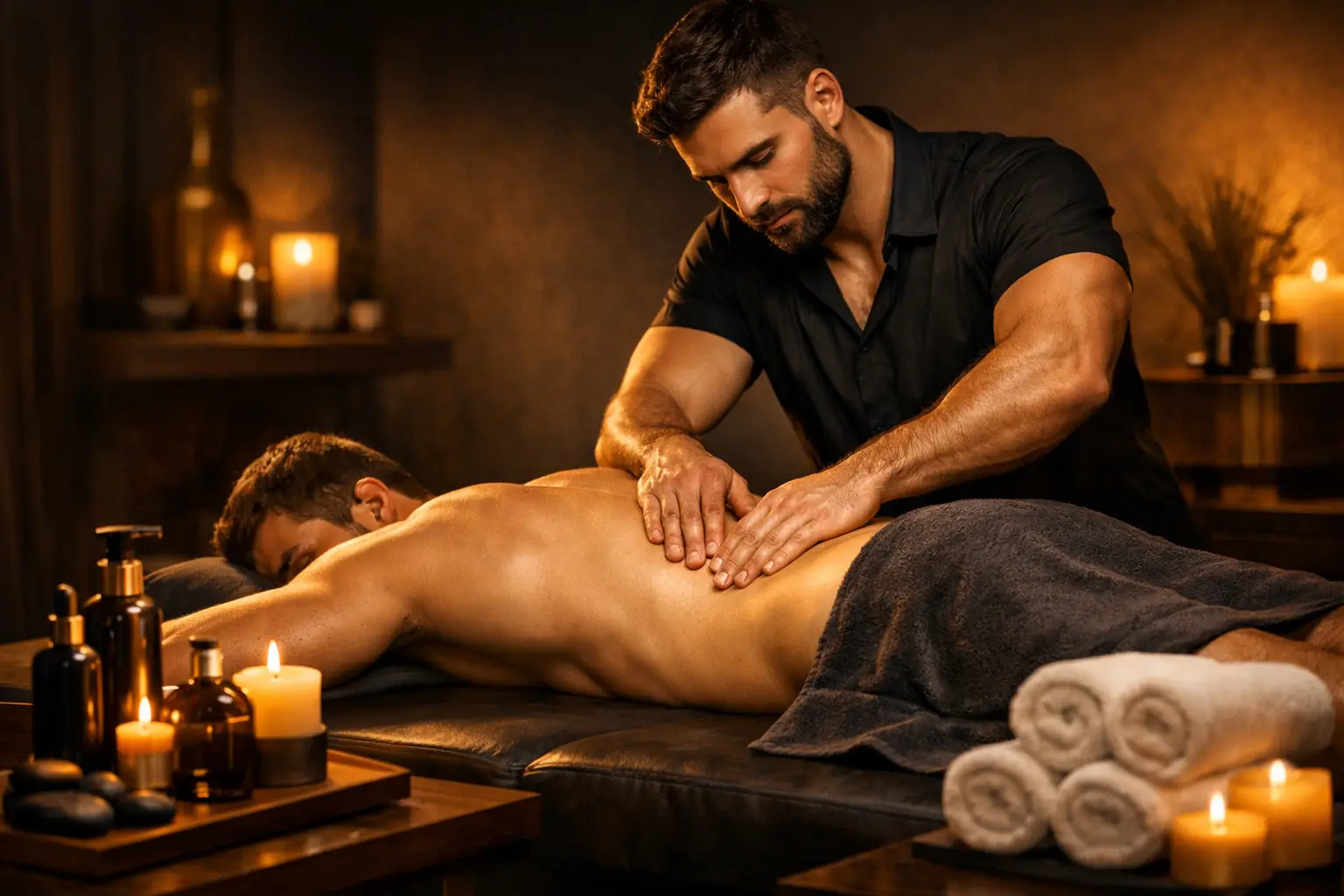
A lower back that feels tight can change the rhythm of an entire day. Sitting through dinner becomes uncomfortable. A short walk feels longer than it should. Even rest can be interrupted by the sense that your body never quite lets go. Massage for lower back tension offers a quieter answer: skilled, attentive touch designed to help the body soften, breathe, and return to a more comfortable state.
At Ricardo Masseur, each appointment is private, unhurried, and shaped around the person on the table. The setting is intimate but firmly professional, with premium oils, a carefully prepared atmosphere, and clear boundaries from the first conversation. The purpose is simple: relief that feels personal, not mechanical.
Why lower back tension builds up
The lower back carries more than people realize. Long hours at a desk, travel, driving, intense training, poor sleep, and stress can all create a familiar pattern of tightness around the lumbar area, hips, glutes, and upper legs. Sometimes the discomfort is local. Often, it is connected to nearby muscles that have been quietly compensating for too long.
Stress has its own physical language. Shoulders rise, breathing becomes shallow, the jaw tightens, and the muscles around the spine stay ready for movement even when there is no need to move. This is why a back massage can feel like more than work on one area. When the nervous system is given space to settle, the entire body may feel less guarded.
Massage is not a substitute for medical care, and it cannot diagnose an injury. But for common muscular tension, fatigue, and stiffness, a thoughtful session can be a valuable part of a wider self-care routine. The right approach depends on what your body is asking for that day.
What a massage for lower back tension should include
Good bodywork begins before the first drop of oil. A brief private conversation helps establish where the tension is strongest, whether the discomfort is new or recurring, what pressure feels right, and which areas should be avoided. This matters because lower back discomfort is not one-size-fits-all. Deep pressure can feel restorative for one guest and too intense for another.
The session may start gradually, allowing the body to settle before more focused work begins. Slow strokes across the back can warm the tissue and create a sense of safety. From there, attention may move to the muscles beside the spine, the hips, glutes, and the back of the thighs. These areas often influence how freely the lower back can move.
Pressure should be intentional, never performed for its own sake. More force does not automatically mean more relief. A skilled massage balances firm, targeted techniques with gentler work that lets the body release without bracing against pain. You should be able to communicate at any point, ask for an adjustment, or simply enjoy the quiet.
In a premium private setting, the experience also has room to breathe. There is no rushed turnover between clients and no need to adapt to the noise of a crowded spa. Your comfort, privacy, and pace guide the appointment.
The hips and glutes are part of the picture
Many people request work on the lower back but find that their real sense of relief begins around the hips and glutes. These muscles support everyday movement, from climbing Lisbon's hills to sitting at a laptop or carrying luggage through the city center. When they are tight, the lower back may have to work harder.
Addressing these connected areas can make a session feel more complete. It also avoids the common mistake of treating the lower back as an isolated problem. A considered full-body approach can be especially welcome after a long flight, demanding workweek, or period of little movement.
Choosing the right session length
A 60-minute appointment can be an excellent choice for focused relief, particularly when the priority is the back, shoulders, neck, hips, and legs. It is concise but still allows time for the body to slow down.
For guests who arrive carrying significant tension or simply want a deeper reset, 90 minutes creates more space. The therapist can work with greater patience, revisit areas that need attention, and include calming full-body relaxation rather than moving quickly from one technique to the next.
A 120-minute session is for those who want to give themselves time without watching the clock. It suits a more expansive experience that combines tension relief with profound rest and sensory presence. The longer format is not necessarily more intense. Often, its value is that the treatment can remain slow, elegant, and responsive.
When relaxing touch is the better choice
Not every tense back needs a highly focused deep-tissue style. If your body feels drained, sensitive, or overstimulated, a relaxing massage may offer more benefit than aggressive pressure. Long, flowing movements and warm premium oils can ease the feeling of being compressed by the day while still bringing attention to areas of tightness.
For adults interested in tantra-inspired relaxation, the essential quality is conscious presence. It is not about performance or pressure to have a particular experience. It is about feeling grounded in the body, receiving touch with clarity, and allowing tension to dissolve within an atmosphere of mutual respect. Consent, communication, and established limits remain central throughout.
This approach can be particularly meaningful when lower back tension is tied to stress, emotional exhaustion, or a disconnection from physical comfort. It does not replace therapeutic treatment for a medical condition, but it can offer a deeply restorative pause.
A few signs to pause and seek medical advice
Massage is generally best reserved for muscular tightness that feels familiar and stable. If back pain follows a fall, accident, or sudden impact, it is wise to seek medical evaluation first. The same applies if discomfort comes with numbness, weakness in the legs, unexplained fever, loss of bladder or bowel control, or pain that is severe and rapidly worsening.
Be open about recent surgery, herniated disc concerns, osteoporosis, pregnancy, skin irritation, blood-thinning medication, or any condition that may affect the session. A professional therapist would rather adapt the treatment than make assumptions. Clear information protects both comfort and safety.
Make the relief last beyond the table
The calm after massage is worth protecting. Drink water if it feels good, avoid rushing immediately into another demanding task, and give your body a little time before a hard workout. A gentle walk can be helpful, especially after long periods of sitting.
Small habits matter more than dramatic corrections. Change your position during work, take a few slow breaths before bed, and notice whether your hips and hamstrings feel restricted after travel or exercise. If tension returns frequently, regular massage may be more useful than waiting until discomfort becomes overwhelming.
There is also no need to chase perfection. Some days, the goal is not to feel completely transformed. It is simply to leave with less weight in your back, more room in your breath, and the satisfying reminder that your body deserves careful attention.
A private appointment in Bairro Alto offers that pause in the center of Lisbon: discreet, comfortable, and fully tailored to you. When the lower back has been carrying too much, giving it an hour - or more - of skilled care can be a quietly powerful way to feel at home in your body again.