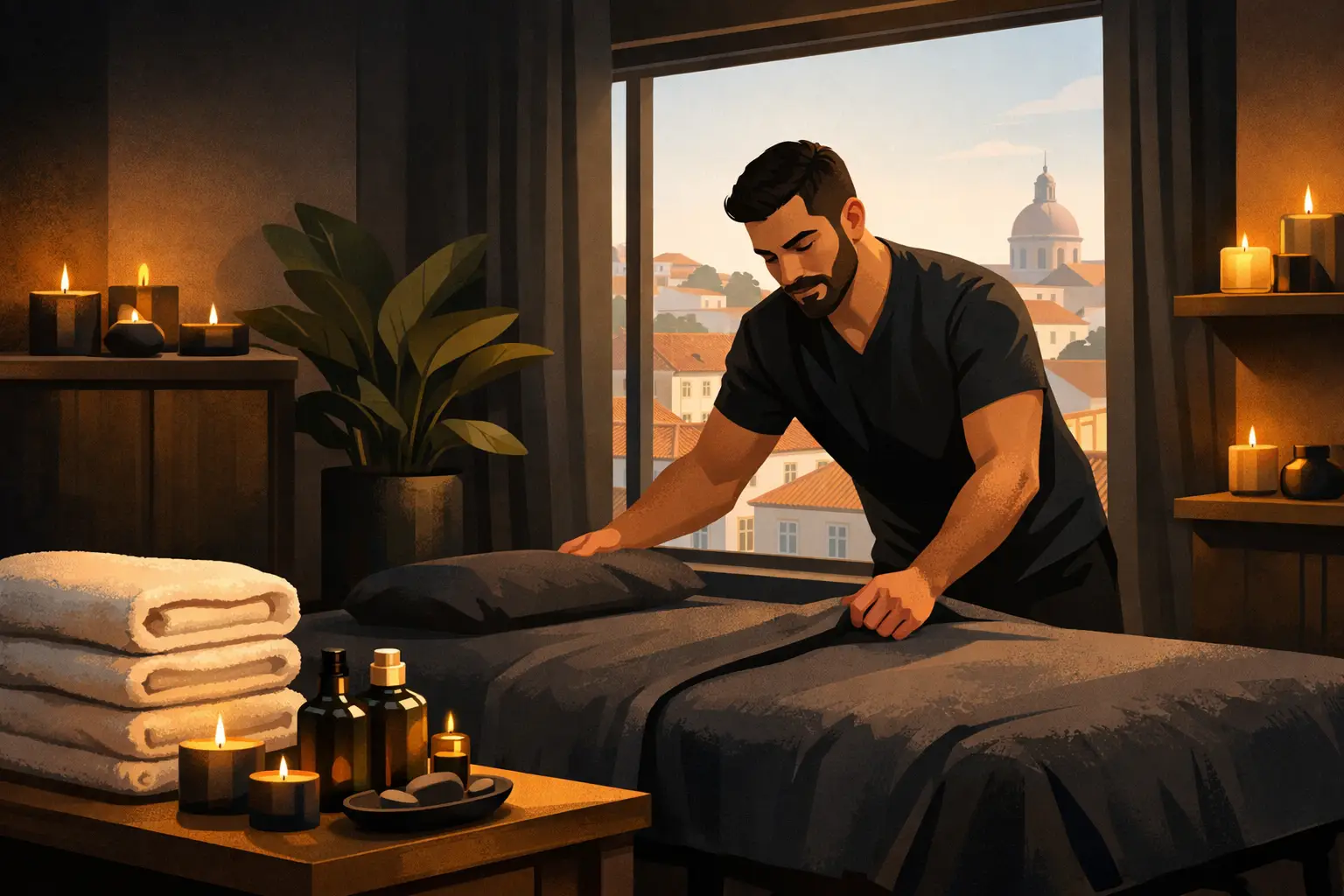
The pressure rarely arrives alone. It settles in the shoulders after long flights, tightens the neck after hours at a laptop, and follows you through a busy evening in Lisbon. Massage for stress relief offers a private pause from that accumulation: skilled touch, a calm room, and time that belongs only to your body.
For adults who value discretion as much as comfort, the setting matters. A crowded spa can feel like another appointment to rush through. A private session creates a different rhythm. The door closes, the phone is silent, and the body has permission to slow down.
Why Massage for Stress Relief Feels Different
Stress is not only a thought. It is often physical. You may notice a clenched jaw, shallow breathing, stiff upper back, restless sleep, or a feeling that you cannot fully settle even when the day is over. A well-paced massage can bring attention back to these signals without forcing the experience.
The value is not simply in pressure on sore muscles. It is in the combination of touch, warmth, quiet, and undivided attention. As the body softens, many people find it easier to breathe more deeply and step away from the mental noise that has been following them.
This is not a promise to erase every source of stress. Deadlines, travel plans, difficult conversations, and physical strain may still be waiting afterward. But a dedicated session can change how you meet them: less contracted, more rested, and more present in your own body.
For some guests, a firm focus on the shoulders, back, and legs is what brings the most relief. Others need a slower, more sensory experience where the pace is gentler and the atmosphere carries equal weight. There is no single correct way to relax. The session should respond to what you need that day.
Privacy Creates Room to Let Go
True relaxation asks for trust. Before any massage begins, there should be clarity about preferences, pressure, comfort, consent, and personal boundaries. These details are not formalities. They allow you to stop performing, explaining, or anticipating what comes next.
At Ricardo Masseur, sessions are arranged privately in Bairro Alto and by appointment only. The address is shared after confirmation, protecting the quiet and discretion of every guest. It is an intimate, elegant setting designed for adults who prefer personal service over an impersonal wellness routine.
Candles, premium oils, a carefully prepared space, and a calm professional presence all shape the experience. None of these details replaces expertise, but they help the nervous system understand that it is safe to slow down. Privacy is not an extra. For many clients, it is the beginning of relief.
A premium massage should never feel rushed or ambiguous. Respect remains present from the first message through the final moment of the session. Clear limits make a sensual or tantra-inspired experience more comfortable, not less. They create the freedom to relax with confidence.
Choosing the Right Style of Massage
The most effective session depends on where you carry tension and what kind of rest you are seeking. It may help to describe your day honestly when arranging your appointment: long travel, difficult sleep, gym recovery, desk-related stiffness, or simply the need to be held in a calmer rhythm.
Relaxing massage for a quieter mind
A relaxing massage is often the right choice when you feel overstimulated rather than acutely sore. Smooth, unhurried movements and warm oil can ease the transition from alertness to rest. This style suits guests who have spent the day moving through meetings, airports, city streets, or social plans and want to leave feeling settled.
The pressure can be adjusted throughout. Deep pressure is not automatically better for stress. If the body braces against it, relaxation can become another task. The best approach is the one that lets your breathing deepen and your muscles release naturally.
Tension relief for shoulders, back, and neck
When stress has become muscular, more focused work may be useful. The upper back, neck, shoulders, hips, and calves commonly hold the residue of sitting, training, walking, and carrying bags. A tension-relief massage can spend more time on these areas while still preserving a calm, restorative pace.
This is especially appealing after a long flight into Lisbon or several intense days of work. Tell your therapist where discomfort is concentrated and whether you prefer steady, firm pressure or a lighter touch. Communication during the session is welcome. Your comfort is the reference point.
Massage can support a sense of physical ease, but it is not a substitute for medical assessment. Persistent pain, numbness, injury, severe headaches, or symptoms that concern you deserve guidance from an appropriate healthcare professional.
Tantra and sensory presence
Tantra massage is less about solving one tight muscle and more about returning attention to the whole body. The experience can be slow, intentional, and deeply personal, with a focus on breath, sensation, and present-moment awareness. For adults who are curious but unfamiliar with tantra, a short conversation beforehand can make expectations clear.
The atmosphere may feel more intimate, but professionalism remains constant. Consent is ongoing, boundaries are respected, and the session is tailored rather than scripted. This balance is central to a refined experience: bold, elegant, and private without becoming careless or vulgar.
How Much Time Does Your Body Need?
A 60-minute session is a focused reset. It works well when your schedule is tight or when you want attention concentrated on a few areas, such as the back, shoulders, and neck. It can bring welcome relief, though it may take the first part of the hour simply to arrive and let the body settle.
Ninety minutes offers more space. There is time for a full-body approach without rushing past the areas that need additional care. For many guests, this is the ideal balance between depth and ease, particularly after travel or a demanding week.
A 120-minute session is for those who want to slow down completely. The longer format supports a more gradual transition, deeper relaxation, and a lingering sense of calm. It is often the best choice when the goal is not only muscle relief but a fuller sensory retreat from routine.
Longer is not always necessary. If you are new to private massage, a 60- or 90-minute appointment may feel more comfortable. If you already know that your body takes time to unwind, two hours can be a meaningful investment in rest.
Prepare for a More Restorative Session
You do not need an elaborate ritual before your appointment. Arriving a few minutes early in your mind is enough. Avoid scheduling the session between commitments that demand immediate attention if possible. Give yourself room afterward rather than treating relaxation as one more item on a checklist.
A light meal and hydration can help you feel more comfortable. Share any relevant sensitivities, injuries, areas to avoid, or preferences for pressure before the massage starts. Honest communication is discreet and simple. It helps create a session that feels personal from the first touch.
Afterward, move slowly. Drink water, take a warm shower if you wish, and notice whether you want silence, a gentle walk, or an early night. You may feel deeply relaxed, emotionally lighter, or pleasantly tired. Those responses can all be part of releasing accumulated tension.
The most useful measure of a session is not whether it was intense. It is whether you leave feeling more at home in your body. Give yourself that quiet space when you need it. A calmer evening can begin with one private hour of care.