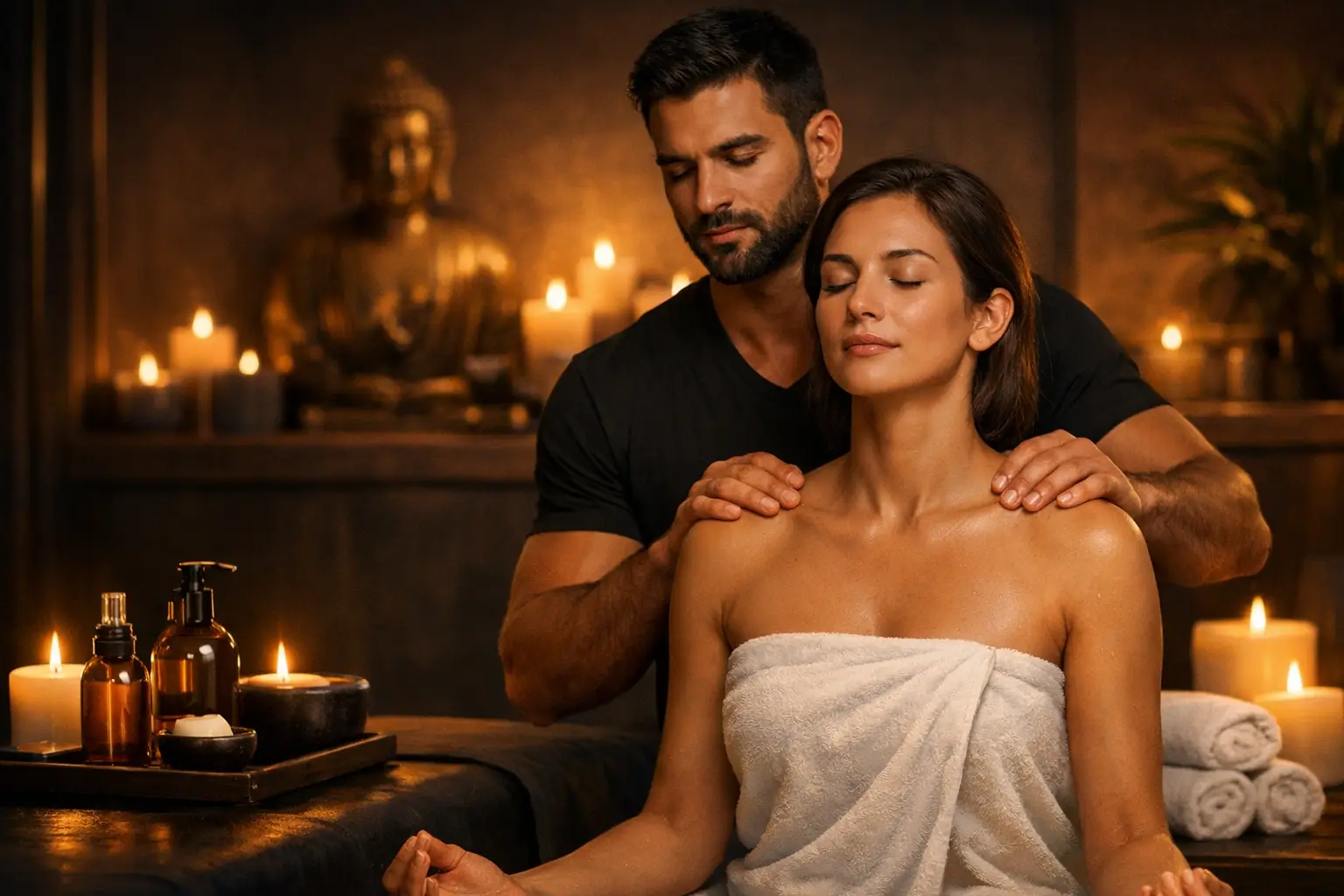
A massage can feel technically excellent and still leave the mind racing. Breath is often the missing element. Tantra massage breathing techniques create a slower, more conscious rhythm between touch, sensation, and attention, helping the body move from guarded tension toward a quieter, more settled state.
For adults seeking a private, premium experience in Lisbon, this does not need to feel complicated or performative. The most effective practice is often simple: breathe without forcing, notice what changes, and communicate clearly whenever something needs to slow down, stop, or shift.
Why Breath Changes the Massage Experience
Stress tends to make breathing shallow. The shoulders rise, the jaw tightens, and the nervous system stays alert even while the body is lying down. Gentle massage may soften the muscles, but a held breath can keep part of the client braced against the experience.
Intentional breathing gives the body another signal: there is no need to hurry. A longer exhale can support a sense of release, while steady inhales make it easier to stay present with touch rather than mentally planning the rest of the day. The goal is not to produce a dramatic reaction. It is to make space for comfort, awareness, and choice.
This is where tantra-inspired massage differs from a routine focused only on knots or pressure. Touch is paced with attention. Breath is treated as part of the session, not as an instruction to be followed perfectly. Some clients prefer silence. Others benefit from a few calm prompts. It depends on experience, mood, and how the body responds that day.
Tantra Massage Breathing Techniques to Practice
The following approaches are gentle, practical, and suitable for adults who want a more grounded sensory massage. They should never replace clear communication, and none should involve discomfort, dizziness, or strain.
Begin With a Natural Breath Check
Before the massage settles into a rhythm, take a moment to notice the breath as it already is. Is it high in the chest? Quick? Interrupted? There is nothing to fix immediately. Observation alone can reduce the impulse to tense up.
Try placing attention on the movement of the ribs and abdomen for four or five breaths. Let the inhale arrive naturally through the nose if comfortable, then let the exhale leave without pushing. This quiet check-in helps establish a baseline. It also makes it easier to notice when pressure, temperature, or pace needs adjustment later.
Let the Exhale Be Slightly Longer
A simple longer-exhale pattern is one of the most accessible tantra massage breathing techniques. Inhale comfortably for a count of three or four, then exhale for a count of five or six. The count is not a test. If counting creates tension, abandon it and simply allow the out-breath to be a little slower.
This can work especially well when massage focuses on common holding areas such as the upper back, neck, hands, hips, and feet. During the exhale, imagine the body becoming heavier against the table. Rather than trying to release a muscle, let it be supported.
For some people, a longer exhale can feel unusually emotional or intense. That is a reason to return to normal breathing, not to push deeper. A premium massage experience respects the body’s pace at every moment.
Breathe Into the Area Receiving Touch
“Breathe into it” is not a literal instruction. Air does not travel into a shoulder or lower back. Instead, it is a useful focus exercise: during the inhale, bring attention to the area receiving touch; during the exhale, let that area soften as much as it comfortably can.
This technique may help when a client notices protective tension. If the shoulders pull upward during work on the back, for example, the client can inhale with awareness of the shoulders, then exhale while allowing them to drop. It is subtle, yet the change in perceived pressure can be significant.
Avoid using this technique to endure pain. Massage pressure should remain within an agreed, manageable range. Sharp pain, numbness, tingling, or a feeling of alarm requires an immediate adjustment.
Match Breath to Slow, Grounded Strokes
When touch is unhurried, breath can naturally find a rhythm with it. A long glide across the back may begin with an inhale and resolve with an exhale. Gentle work around the shoulders may be more comfortable during the out-breath, when many people find it easier to let go.
This is not choreography. There is no requirement to synchronize every stroke. The value lies in sensing continuity rather than being pulled between separate thoughts. The room feels quieter. The body has time to register each movement.
At Ricardo Masseur, a session is approached as a personalized adult wellness experience, with professional presence, premium oils, and clear boundaries. Breathing guidance, when welcomed, should feel discreet and supportive rather than demanding.
Use a Soft Sound Only if It Feels Natural
Some clients find that a quiet sigh on the exhale relaxes the throat and jaw. Others prefer silent breathing. Both are valid. A low, unforced sound can be helpful when the body is holding tension, but it should never feel staged or expected.
The key word is soft. Forced breathing, loud effort, or fast patterns can make the nervous system more alert and may cause lightheadedness. A refined session leaves room for genuine responses, without pressure to perform relaxation in a particular way.
Breathing, Consent, and Clear Boundaries
Breath-based awareness can heighten sensation, which makes consent even more central. Before the session, clarify preferences around pressure, areas of focus, conversation, music, and breathing cues. During the massage, consent remains active. A previous yes does not remove the right to change direction at any time.
A professional practitioner should welcome simple feedback: “lighter pressure,” “stay there,” “please avoid that area,” or “I need a pause.” You do not need to explain or justify a boundary. Clear language protects relaxation because it removes uncertainty.
Clients can also use breath as information. If breathing becomes tight, involuntary, or difficult, the body may be asking for less intensity, a different position, or a break. Deep relaxation is never measured by how much sensation someone can tolerate.
Preparing for a More Restful Session
Breathing starts before the first touch. Arriving a few minutes early in your own mind can change the quality of the entire appointment. Put notifications away, avoid rushing in immediately after a difficult call, and give yourself a moment to transition.
A light meal beforehand is usually more comfortable than arriving overly full or hungry. Hydration is useful, but there is no need to overdo it. Wear clothing that is easy to change out of and share relevant comfort concerns with the practitioner, especially recent injuries, sensitivity to pressure, breathing conditions, or areas that should not be touched.
The environment also matters. A private setting, a warm room, carefully chosen oils, and an unhurried pace are not superficial details. They reduce distractions and help the body settle. Still, even the most elegant setting cannot substitute for safety, respect, and good communication.
When Simpler Is Better
Breathwork is not always the answer. If someone is anxious, new to body-focused massage, recovering from a stressful period, or simply tired, normal unstructured breathing may be the best choice. A skilled session meets the client where they are rather than trying to create intensity.
People with respiratory conditions, panic symptoms, pregnancy-related concerns, recent surgery, or cardiovascular issues should avoid forceful breath retention and seek appropriate medical guidance when needed. Massage should support comfort, not turn into a challenge.
The most useful breath is the one that leaves you feeling more at ease in your body. Let it be quiet, let it be honest, and let clear boundaries guide every moment of the experience.