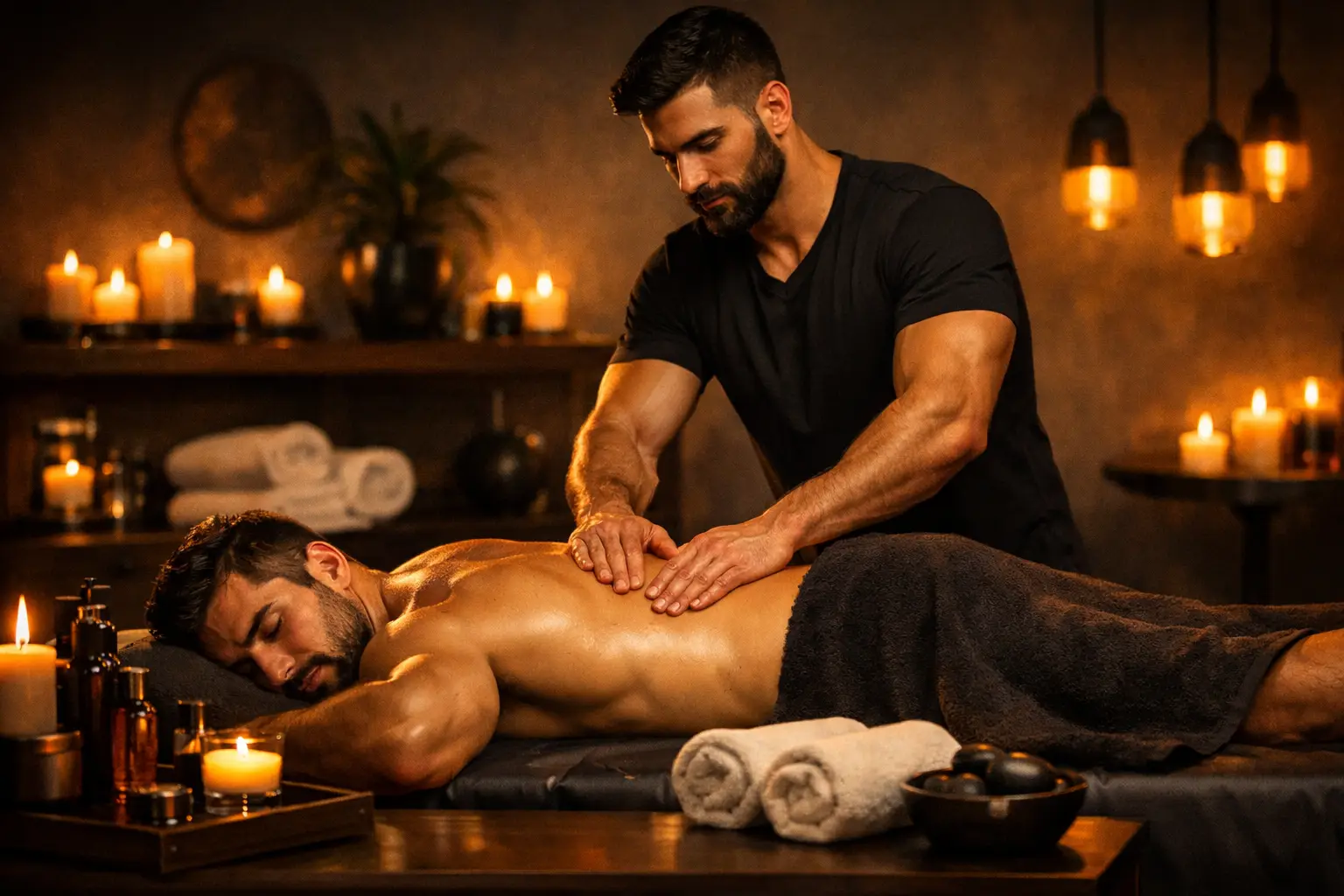
A stiff neck that changes how you turn your head. Shoulders that rise toward your ears after a long flight. Lower-back tension that makes standing up feel less effortless than it should. Therapeutic massage for mobility is designed for these moments: when the body is asking for careful attention, slower breathing, and space to move more freely.
At Ricardo Masseur in Bairro Alto, every session is private, adult, and shaped around your comfort. The aim is not to force the body into range. It is to soften unnecessary tension, bring awareness back to areas that feel guarded, and create a calmer relationship with movement.
What Therapeutic Massage for Mobility Can Support
Mobility is more than flexibility. It is the practical ease of reaching for a bag, walking through Lisbon’s hills, working at a laptop without constant shoulder pressure, or settling into sleep without searching for a painless position. When muscles stay contracted for too long, the body often adapts by limiting movement. That protection can feel like stiffness, pulling, fatigue, or a familiar ache across the neck, back, hips, or legs.
A therapeutic massage uses intentional pressure, sustained contact, and thoughtful pacing to address muscle tension that may be contributing to those restrictions. The work can help improve how the tissues feel and how comfortably you move afterward. For some guests, the most noticeable change is a lighter upper back. For others, it is easier rotation through the hips or less resistance in the calves after hours of walking.
Results vary. One session can provide a meaningful reset, especially when stress and muscle fatigue are the main factors. Long-standing tightness, a demanding training schedule, sedentary work, or an old injury may respond better to regular sessions combined with rest, hydration, and movement guidance from an appropriate health professional.
A Personalized Session, Not a Routine
Premium care begins with listening. Before the massage starts, there is time to discuss where you feel restricted, what type of pressure feels right, and whether you want the session to focus on one area or offer full-body balance. You remain in control throughout. Clear communication and consent are part of the experience, not an afterthought.
The massage may concentrate on the shoulders, neck, lower back, glutes, hips, thighs, calves, hands, or feet, depending on your needs. Slow, targeted techniques can be used where muscles feel dense or overworked, while longer, more relaxing strokes help the nervous system settle. The combination matters. Deep pressure alone is not always the answer, particularly when the body is already bracing.
This is why a refined therapeutic experience feels different from a hurried treatment. The room is quiet. Premium oils support smooth, comfortable contact. Candlelight and a discreet setting allow the mind to slow down alongside the body. Touch that relieves. Presence that welcomes.
Pressure Should Feel Productive, Never Punishing
Many people assume that effective therapeutic massage must hurt. In reality, excessive pressure can make muscles tighten further, leave you sore for days, or cause you to guard the area afterward. Productive work can feel intense at times, but it should remain tolerable and responsive to your feedback.
If you prefer a firmer approach, that can be integrated with care. If your body needs gentler, slower work, that is equally valid. The right pressure depends on the area being treated, your stress level, recent activity, and personal sensitivity. A massage is not a test of endurance.
When Mobility Feels Limited by Modern Life
Travel, desk work, long dinners, workouts, and poor sleep often create the same physical pattern: the chest feels closed, shoulders round forward, hips become less responsive, and the lower back takes on more work than it should. Lisbon visitors may feel this after a flight, a day of sightseeing on cobblestone streets, or too many hours seated between meetings.
Therapeutic massage can be especially welcome when you notice recurring tension rather than a sudden acute injury. It can support recovery after general muscular exertion, reduce the sensation of heaviness, and help you reconnect with areas of the body you have been ignoring. The emotional effect is often just as valuable. When the body is no longer constantly defending itself, breathing can deepen and the mind can become quieter.
A 60-minute session is a focused choice for a specific concern, such as neck and shoulder tension or tired legs. Ninety minutes allows more time to address the whole body while giving additional attention to restricted areas. A 120-minute appointment is suited to guests who want a slower, unhurried experience with space for deep relaxation and more complete bodywork.
Therapeutic Care Within Clear Adult Boundaries
An intimate environment can make therapeutic touch feel more restorative. Privacy, warmth, and sensory comfort help many guests release the tension they carry in both body and mind. Yet intimacy should always exist alongside professionalism, discretion, and clear limits.
This is an adult service offered by appointment only. Your preferences, comfort, and boundaries are respected from the first conversation through the end of the session. A therapeutic massage may be calming and deeply personal, but it is never assumed to mean more than what has been agreed together. That clarity allows you to relax without uncertainty.
For guests interested in tantra or sensual massage, therapeutic elements can also be part of a personalized experience. The focus remains respectful and consent-led. Some people seek muscular relief with a purely therapeutic approach; others value a more sensory, mindful atmosphere. These are different intentions, and they should be discussed openly before the appointment.
What to Do Before and After Your Session
Arrive with enough time to settle. Avoid scheduling a demanding workout immediately before your massage if your muscles are already fatigued. A light meal, comfortable clothing, and a few quiet minutes can make it easier to receive the work fully.
Afterward, give your body a gentle landing. Drink water if you are thirsty, move slowly when standing, and avoid rushing straight into another physically demanding plan. Some guests feel immediate ease; others notice the change gradually over the next day as the body lets go of residual tension. Light walking and comfortable movement are often preferable to intense stretching right away.
If you have a recent injury, unexplained pain, fever, severe swelling, numbness, circulatory concerns, or a condition that requires medical care, seek advice from a qualified healthcare professional first. Massage can be a valuable complement to well-being, but it does not diagnose injuries or replace medical treatment.
Private Care in the Heart of Bairro Alto
A mobility-focused session should not feel clinical or impersonal. In a discreet private setting in central Lisbon, you can step away from crowded wellness spaces and receive individual attention in an elegant, calm environment. The exact address is shared only after a confirmed appointment, protecting the privacy of every guest.
Reservations are handled directly by WhatsApp, allowing you to ask practical questions, choose a session length, and communicate your needs confidentially. Whether you live in Lisbon, are visiting for a few days, or need a quiet reset between professional commitments, the experience is arranged around your schedule and comfort.
Your body does not need to be at a breaking point to deserve care. When movement starts to feel restricted, a considered therapeutic session can offer a quieter, more comfortable way back to yourself.